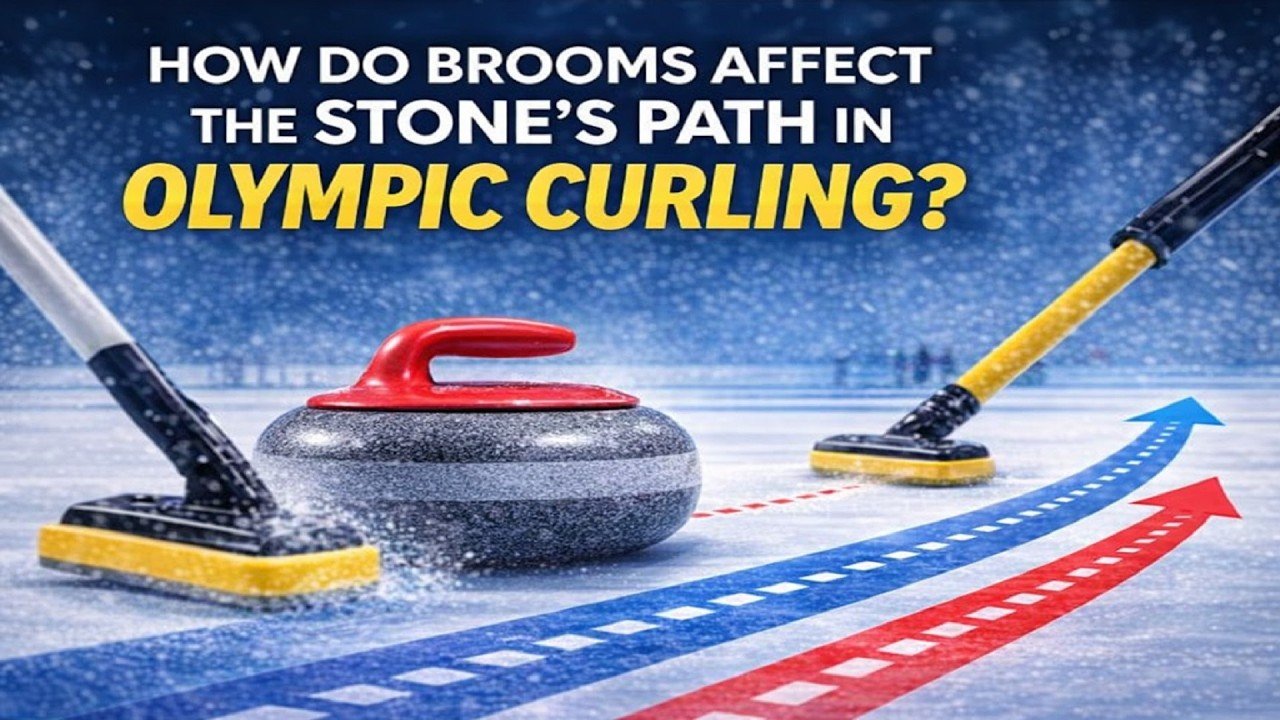
Why does sweeping change where a curling stone ends up? Brushes reduce friction between the stone and the ice, allowing the stone to travel farther and straighter than it would without sweeping.
The Physics Behind Sweeping and Ice Friction
When a curler releases a stone, it glides across a sheet of pebbled ice. The pebbled surface creates tiny contact points that generate friction. This friction slows the stone and causes it to curl, or deviate from a straight line. Background on how do brushes affect the stone’s path in olympic curling? co.uk/how-do-brushes-affect-the-stones-path-in-olympic-curling/” rel=”noopener noreferrer” target=”_blank”>How Do Brushes Affect the Stone's Path in Olympic Curling?
Sweeping with a brush heats the ice surface through friction. This thin layer of meltwater reduces the coefficient of friction between the stone and the ice. The result is twofold: the stone travels farther and its curl is reduced.
Research conducted at the University of Northern British Columbia explored the relationship between sweeping intensity and stone behavior.
The effect is not uniform across the entire ice sheet. Ice conditions vary from sheet to sheet and even from end to end. Teams must adapt their sweeping strategy based on real-time observations during each end of play.
| Sweeping Effect | Impact on Stone |
|---|---|
| No sweeping | Stone curls more and stops sooner |
| Light sweeping | Moderate reduction in curl and speed loss |
| Vigorous sweeping | Stone travels farther with less curl |
What Is Confirmed and What Remains Unverified
The basic physics of sweeping are well established. Friction from the brush head melts the pebbled ice surface, creating a thin water film. This film reduces drag on the stone, allowing it to maintain speed and direction more effectively.
However, the exact temperature increase caused by sweeping remains a subject of ongoing study. Some researchers estimate the ice surface rises by only a fraction of a degree Celsius. Others argue the localized effect is more significant than current measurements suggest.
There is also debate about how much sweeping affects curl versus distance. Most evidence suggests sweeping has a greater impact on distance than on lateral curl. Yet elite curlers insist that subtle sweeping adjustments can meaningfully alter a stone’s final resting position.
The role of brush head material has also drawn scrutiny. In 2016, the World Curling Federation introduced regulations on approved brush heads after concerns that certain synthetic materials provided an unfair advantage. This decision followed complaints from multiple national federations about inconsistent equipment standards.
How Elite Teams Use Sweeping as a Strategic Weapon
At the Olympic level, sweeping is not just physical labor. It is a precise tactical tool. The skip, standing at the far end of the sheet, reads the ice and directs sweepers with specific instructions about when and how hard to sweep.
Teams like Canada’s Brad Gushue rink and Sweden’s Niklas Edin squad have demonstrated how sweeping decisions can determine the outcome of tight matches. At the 2022 Winter Olympics in Beijing, sweeping calls in the men’s final between Great Britain and Sweden drew significant attention from analysts and fans alike.
The placement of sweepers matters too. Two sweepers working in coordination can cover more of the stone’s path. Their timing must align precisely with the stone’s movement to maximize the effect on the ice surface ahead of it.
Physical conditioning plays a major role. Sweeping at competitive intensity places significant demands on the upper body and core. Teams invest considerable effort in fitness training specifically designed to sustain sweeping performance throughout a full game.
Why Sweeping Strategy Matters for Olympic Viewers and the Sport’s Future
Understanding sweeping transforms how audiences watch curling. What might look like simple sweeping is actually a complex interplay of physics, athleticism, and split-second decision-making. This depth adds layers of strategy that distinguish elite competition from recreational play.
The visibility of sweeping controversies has also shaped the sport’s governance. The 2016 brush head regulations marked a rare instance of equipment rules being tightened mid-competition cycle. This move signaled the federation’s commitment to maintaining fairness as technology evolves.
For aspiring curlers, mastering sweeping technique is as important as delivery skill. Junior programs increasingly emphasize sweeping mechanics alongside traditional coaching on weight control and line calling.
Broadcast coverage has adapted as well. Modern Olympic curling broadcasts now feature slow-motion replays that highlight the interaction between brush and ice. Analysts use thermal imaging technology to show how sweeping changes the ice surface temperature in real time.
Frequently Asked Questions
Why does sweeping make a curling stone go farther?
Sweeping generates friction that melts the pebbled ice surface, creating a thin water layer. This reduces drag between the stone and the ice, allowing the stone to maintain its speed over a longer distance than it would without sweeping.
Where on the ice sheet does sweeping have the greatest effect?
Sweeping is most effective on the ice directly in the stone’s path ahead of it. Sweeping behind the stone has no effect. The impact is strongest when applied consistently across the full width of the stone’s trajectory.
When did the World Curling Federation regulate brush head materials?
The World Curling Federation introduced regulations on approved brush heads in 2016. The decision followed concerns from multiple national federations that certain synthetic brush head materials were providing an unfair competitive advantage during international competition.
Is sweeping still considered controversial in competitive curling today?
While the 2016 brush head controversy has largely been resolved through regulation, sweeping remains a topic of debate. Some analysts argue that sweeping can compensate for imperfect deliveries, potentially reducing the skill gap between teams of different experience levels.
How many sweepers typically work on one stone during an Olympic match?
Two sweepers typically work on one stone simultaneously during Olympic curling matches. They coordinate their efforts under the skip’s direction, positioning themselves on either side of the stone’s path to maximize coverage and effectiveness.